About the project
Accents and dialects are part of who we are. They carry traces of where we come from, who we grew up with, and how our communities have changed over time.
At the heart of the EAST Project are the accents and dialects of East Anglia. These have played a much bigger role in the history of English than many people realise. They are part of the wider story of how English developed, travelled, and changed across the English-speaking world.
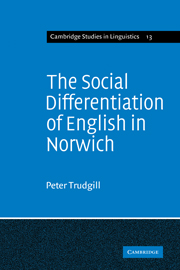
Image from CUP
Our research begins in Norwich — a city with a special place in the history of language research. In 1968, Norwich was the subject of one of the most important accent-and-dialect studies ever carried out, both in Britain and the world. Almost 60 years later, we are returning to Norwich to find out how local ways of speaking have changed across generations, and which features have stood the test of time. This will be the longest such study ever undertaken, putting Norwich at centre stage once again.
We’re also using modern technology to expand the study and record voices from across all of East Anglia, to help preserve our accents and dialects for the future.

About the project
Accents and dialects are part of who we are. They carry traces of where we come from, who we grew up with, and how our communities have changed over time.
At the heart of the EAST Project are the accents and dialects of East Anglia. These have played a much bigger role in the history of English than many people realise. They are part of the wider story of how English developed, travelled, and changed across the English-speaking world.
Our research begins in Norwich — a city with a special place in the history of language research. In 1968, Norwich was the subject of one of the most important accent-and-dialect studies ever carried out, both in Britain and the world. Almost 60 years later, we are returning to Norwich to find out how local ways of speaking have changed across generations, and which features have stood the test of time. This will be the longest such study ever undertaken, putting Norwich at centre stage once again.
We’re also using modern technology to expand the study and record voices from across all of East Anglia, to help preserve our accents and dialects for the future.

Trudgill’s 1968 study
Do people from different social classes really speak differently? And are people aware of their own accents? In 1968, a PhD student at the University of Edinburgh called Peter Trudgill set out to answer questions like these. It was a time when ‘BBC English’ was in, and regional Englishes were often seen as less desirable. Peter set off into Norwich with his tape recorder in hand and recorded 60 people in the city. Little did Peter know, the voices he recorded in Norwich would help to pioneer a new way of studying language in society. His work went on to become one of the most important accent-and-dialect studies to date, placing East Anglia at the heart of modern language research.
Find out more about what Trudgill found:
Trudgill found that working-class speakers used local dialect features more frequently, while middle-class speakers used more standard features.
Trudgill found that people tended to use more standard speech in formal situations. This showed that speakers actively adjust their speech, depending on the situation.
One of Trudgill’s main findings was that women generally used more standard pronunciations than men of the same social class. Trudgill argued that women seem to use language more than men to manage their social status. This is particularly understandable given the time of the original study, when women had much less access to status through work or education.
Not as aware as they think they are! Women often said they used more standard forms than they actually did, while men often said they used more dialect forms than they actually did. This suggested that standard language had ‘overt’ prestige for women, but for men the local dialect carried ‘covert’ prestige, meaning it had social value even if it wasn’t considered “correct”.

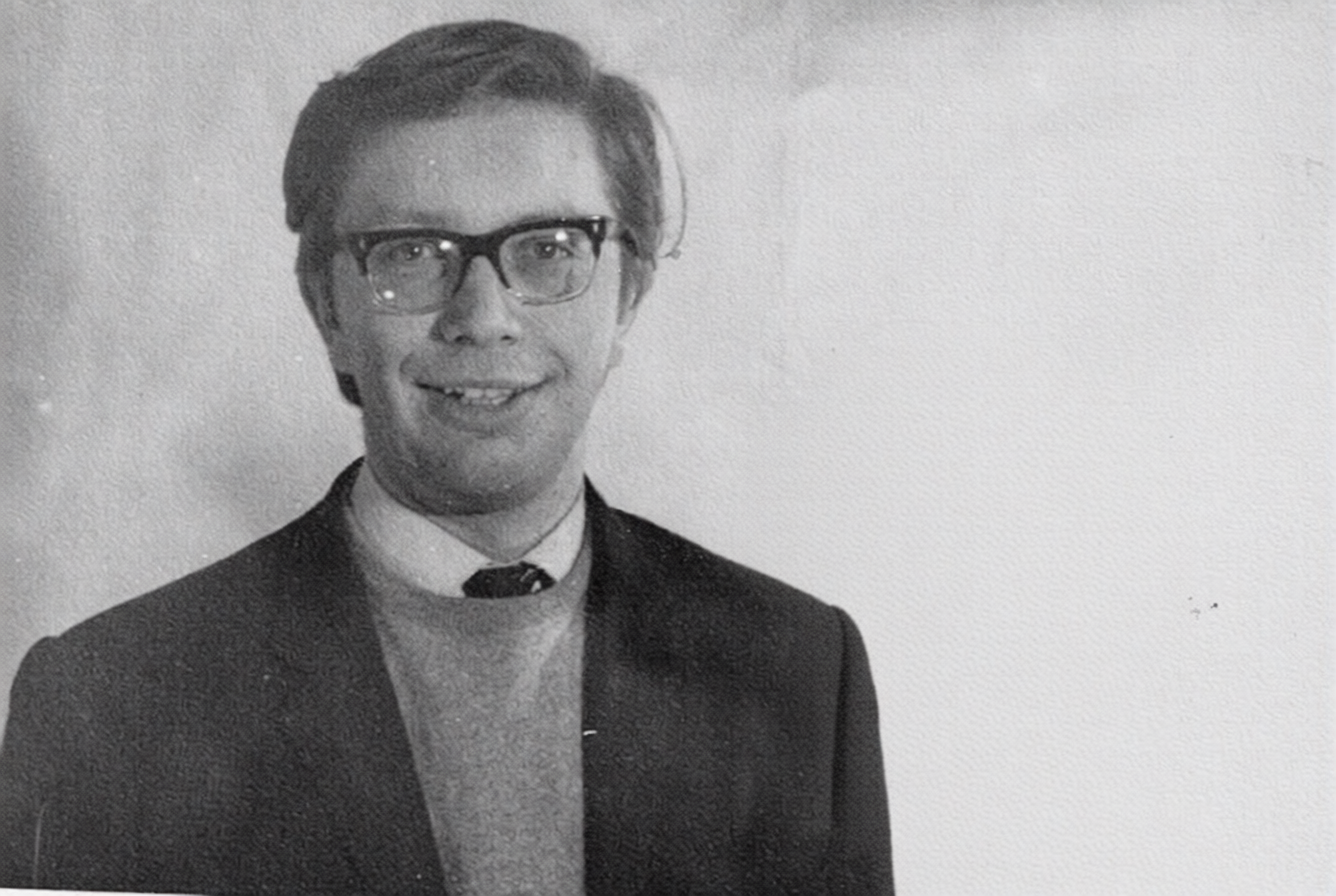
Peter Trudgill, Holkham Beach, Norfolk 1968

Peter and his wife, Sandra, walking into Norwich Library, 1970.

Peter Trudgill, Edinburgh, 1968.
Trudgill’s 1968 study
Do people from different social classes really speak differently? And are people aware of their own accents? In 1968, a PhD student at the University of Edinburgh called Peter Trudgill set out to answer questions like these. It was a time when ‘BBC English’ was in, and regional Englishes were often seen as less desirable. Peter set off into Norwich with his tape recorder in hand and recorded 60 people in the city. Little did Peter know, the voices he recorded in Norwich would help to pioneer a new way of studying language in society. His work went on to become one of the most important accent-and-dialect studies to date, placing East Anglia at the heart of modern language research.
Find out more about what Trudgill found:
Trudgill found that working-class speakers used local dialect features more frequently, while middle-class speakers used more standard features.
Trudgill found that people tended to use more standard speech in formal situations. This showed that speakers actively adjust their speech, depending on the situation.
One of Trudgill’s main findings was that women generally used more standard pronunciations than men of the same social class. Trudgill argued that women seem to use language more than men to manage their social status. This is particularly understandable given the time of the original study, when women had much less access to status through work or education.
Not as aware as they think they are! Women often said they used more standard forms than they actually did, while men often said they used more dialect forms than they actually did. This suggested that standard language had ‘overt’ prestige for women, but for men the local dialect carried ‘covert’ prestige, meaning it had social value even if it wasn’t considered “correct”.

Peter Trudgill, Holkham Beach, Norfolk 1968

Peter and his wife, Sandra, walking into Norwich Library, 1970.

Peter Trudgill, Edinburgh, 1968.
What are the project’s aims and how can you get involved?
Returning to Norwich
We are recording people living in Norwich today so that we can compare present-day speech with the original 1960s recordings. This will help us to understand how Norwich speech has changed or stayed the same across different generations and communities.
Take partRe-recording people from the 1968 study
We’re also trying to trace people who took part in the original 1968 study. Re-recording some of the same speakers would give us a rare opportunity to hear how individual accents may have changed over the course of a lifetime.
That’s meRecording voices across East Anglia
We’re also building a new collection of accents and dialects from across East Anglia. We want to hear from people in towns, cities, villages, coastal communities and rural areas across the region. This will capture East Anglian speech like never before, and form a lasting record at a time when local accents and dialects are changing rapidly.
Record my voiceSo much has change since the 1960s…
East Anglia has changed dramatically since Peter Trudgill first recorded the voices of Norwich in 1968. Towns and cities have grown, industries have changed, people now move in and out of the region more often, and everyday life is shaped by education, media, travel and social change in ways that would have been hard to imagine in the 1960s.
Accents and dialects do not exist in isolation. They live in communities. When communities change, our local ways of speaking can change too. We will find out which traditional East Anglian words, sounds and expressions have become less common over time, and which have survived, been adapted, or become important markers of local identity.
What are the project’s aims and how can you get involved?
Returning to Norwich
We are recording people living in Norwich today so that we can compare present-day speech with the original 1960s recordings. This will help us to understand how Norwich speech has changed or stayed the same across different generations and communities.
Take partRe-recording people from the 1968 study
We’re also trying to trace people who took part in the original 1968 study. Re-recording some of the same speakers would give us a rare opportunity to hear how individual accents may have changed over the course of a lifetime.
That’s meRecording voices across East Anglia
We’re also building a new collection of accents and dialects from across East Anglia. We want to hear from people in towns, cities, villages, coastal communities and rural areas across the region. This will capture East Anglian speech like never before, and form a lasting record at a time when local accents and dialects are changing rapidly.
Record my voiceSo much has change since the 1960s…
East Anglia has changed dramatically since Peter Trudgill first recorded the voices of Norwich in 1968. Towns and cities have grown, industries have changed, people now move in and out of the region more often, and everyday life is shaped by education, media, travel and social change in ways that would have been hard to imagine in the 1960s.
Accents and dialects do not exist in isolation. They live in communities. When communities change, our local ways of speaking can change too. We will find out which traditional East Anglian words, sounds and expressions have become less common over time, and which have survived, been adapted, or become important markers of local identity.
The EAST Project is funded by the ESRC New Investigator Grant ‘The Social Differentiation of Norwich Revisited: A Real-time Approach to Understanding Language Variation and Change’‘.
The project (UKRI Grant Reference: UKRI1665) is based at the University of Leeds.