About the project
We are replicating and building on one of the most well-known accent-and-dialect studies carried out in Britain: Peter Trudgill’s study of Norwich English.
By returning to Norwich to record its local accents and dialects almost 60 years after Trudgill’s original study, we can better understand language change across both the community and over the course of individual lives. We’re also building a collection of accents & dialects from across all of East Anglia.
Trudgill’s original Norwich study
In 1968, Peter Trudgill, then a PhD student at the University of Edinburgh, interviewed 65 people living in the city of Norwich. His participants were selected at random from the phone book, and he met them for the first time when he arrived at their homes with his tape recorder in hand, ready to record their speech. The study aimed to understand how people’s social backgrounds influenced the way they spoke. More specifically, Trudgill set out to answer the following questions (you can expand each one to find out what he found):
Trudgill found that working-class speakers used local dialect features more frequently, while middle-class speakers used more standard forms.
Across all social classes, people tended to use more standard speech in formal situations. This showed that speakers actively adjust their speech depending on the situation, a concept known as style-shifting.
One of Trudgill’s most main findings was that women generally used more standard pronunciations than men of the same social class. This led to the interpretation that women may be more sensitive to social prestige in language.
Men often said they used more dialect forms than they actually did, while women often said they used fewer dialect forms than they actually did. This suggested that local dialect carried something known as ‘covert’ prestige, particularly among men, meaning it had social value within certain groups even if it was not considered “correct”.
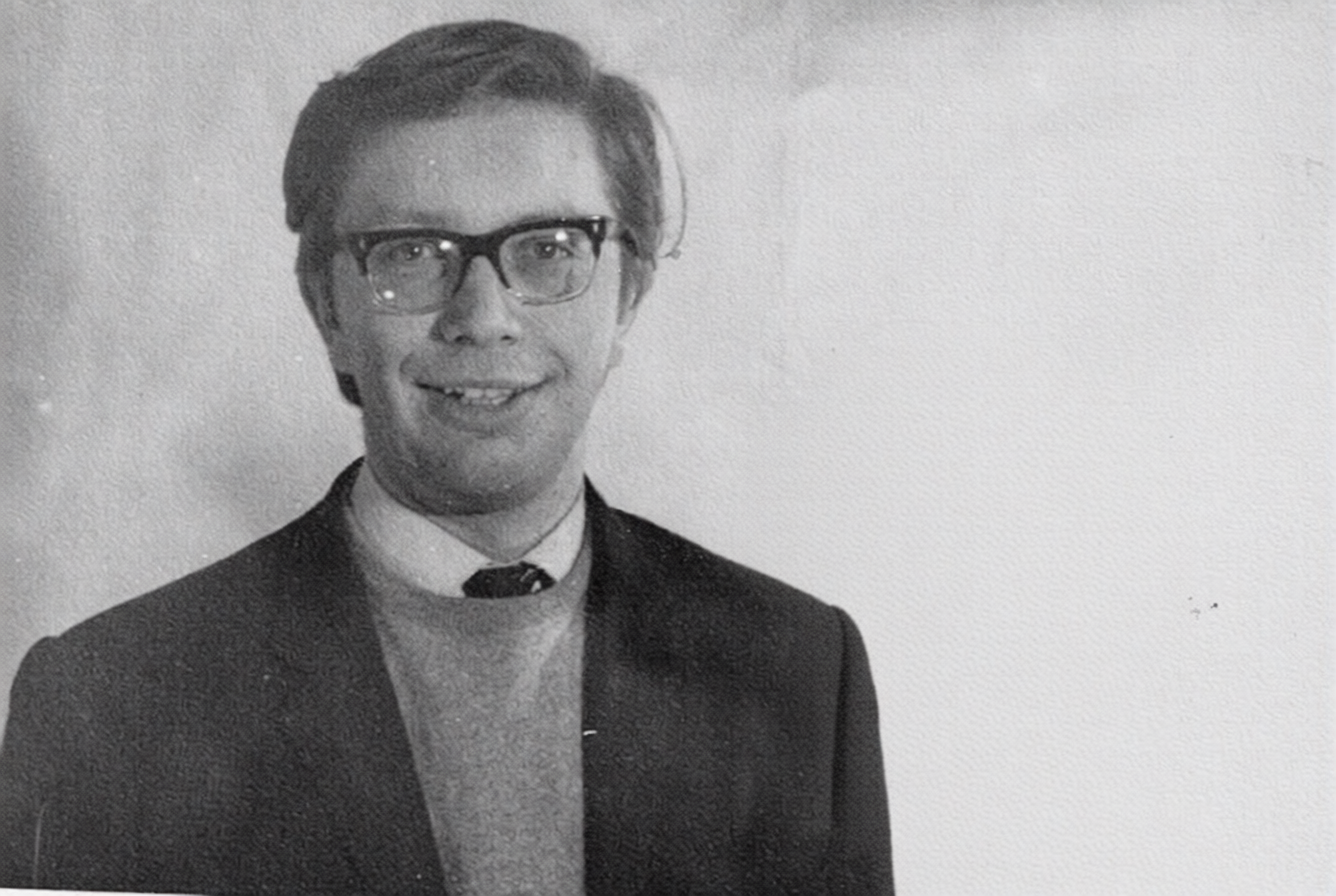
Peter Trudgill, Edinburgh, 1968.

Peter and his wife, Sandra, walking into Norwich Library, 1970.

Peter Trudgill, Holkham Beach, Norfolk 1968
What are the project’s aims?
Project Strand 1: Norwich data collection
Project Strand 2: East Anglian accent and dialect collection
We are conducting a modern replication of the 1968 Norwich study, which will have two main components:
A key part of the project involves carrying out new interviews with people living in Norwich today. By speaking to people from across the community, we can build a detailed picture of what the local accent sounds like now and how speech differs across different generations and social groups. By comparing these new recordings to the 1968 recordings, this will help us to understand which features of Norwich speech have stayed the same, which have shifted over time, and how the city’s accent continues to develop today in relation to things like social class, age, and gender.
The EAST project also focusses on people who were originally recorded by Trudgill as part of the original Norwich study. Where possible, we are trying to trace and re-record these individuals today. Speaking to the same people again will allow us to explore how their speech may have changed over the course of their lives, as they move through different stages. By comparing these new recordings with the original interviews, we can gain a rare long-term perspective on language change across more than half a century.
We are also inviting people to contribute to our permanent collection of accents and dialects from across all of East Anglia. The recordings will be based on Trudgill’s original materials and will be used to support future research, teaching, and local heritage work.
What will we learn?
Over the last century, big social shifts – industry, education, mobility, media, and demographic change – have all altered the conditions in which regional accents and dialects develop. Across Britain, there is some evidence that distinctive local features are being lost, while at the same time traditional accents and dialects are increasingly recognised as an important part of local heritage. This project brings those issues together by using Norwich to provide a long-term view of the social forces that shape language change.
By looking closely at one community over more than half a century, we can better understand not only how Norwich speech has changed, but also how and why regional varieties change more broadly. What we learn here will help shed light on wider patterns of language change across Britain, and on the future of local accents and dialects in a rapidly changing society.
The EAST Project is funded by the ESRC research grant ‘The Social Differentiation of Norwich Revisited: A Real-time Approach to Understanding Language Variation and Change’, which is held at the University of Leeds.